
Unreliable Stories of Famous Dishes No 1.
Coronation Chicken
Rosemary Hume was a Chelsea girl, possibly the first ‘Sloane Ranger’, the daughter of a British army colonel and one of the first British students along with her friend Dione Lucas, to attend the Paris cookery academy, Le Cordon Bleu. When they graduated In 1931, Hume and Lucas were given permission use the Le Cordon Bleu name in London, where they founded L’Ecole du Petit Cordon Bleu. Hume borrowed £2,000 from family and friends, to open the cookery school in two ground-floor rooms of a house they rented in Jubilee Place, off the Kings Road in Chelsea. The large room became the kitchen, and the smaller an office, and in a corridor to the street, they set up tables and chairs to display and serve the students wares to the passing Chelsea set to publicise the school.
The school was successful and Rosemary repaid the loan in full within half the time expected, and was now looking to expand their busy cookery school to include a restaurant as well. When a tea shop under Knightsbridge Court in Sloane Street became vacant in 1935, Hume and Lucas moved in and opened Au Petit Cordon Bleu, publishing a cookery book using the same name a year later. The Second World War put a stop to the cookery classes in 1939 but they managed to keep restaurant open through their ingenuity of creating a menu under a strict rationing regime with substitute ingredients such as powdered milk and eggs, which was seen as a remarkable feat. Lucas later left London in 1942 to open a culinary school in America.
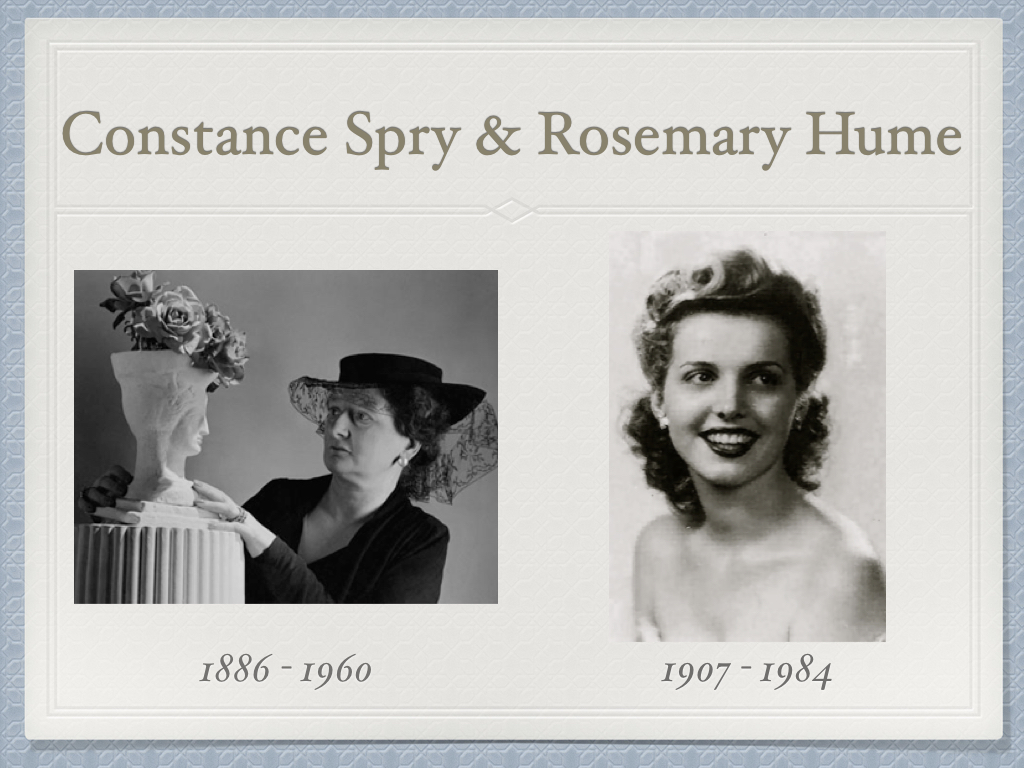
Following the war, Rosemary Hume struck up a friendship with the influential flower arranger Constance Spry, who rented premises in Victoria Street to relaunch her flower school and suggested that Hume reopen the cookery school to run in tandem with hers from the same building. This enabled both schools to offer professional courses in flower arranging and cookery, which surprisingly, proved to be a successful business.
Looking to expand this winning combination, they found a large, charming white painted country house in Berkshire, called Winkfield Place, set in beautiful gardens on the edge of Windsor Forest. Spry and Hume established a residential country school for young women, offering a curriculum based on teaching flower arrangement, cookery, dressmaking, secretarial skills and social etiquette. A former student described Rosemary Hume as ‘a tall thin woman, with a shy smile, and a deft hand at pastry’.
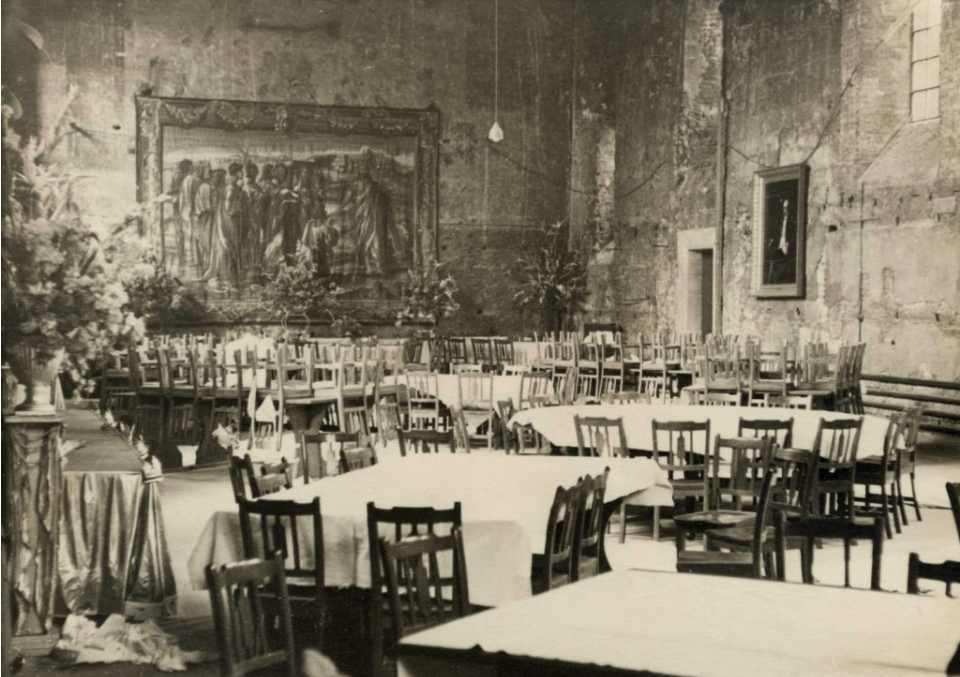
In the early months of 1953, according to Le Cordon Bleu London, ‘Sir David Eccles, the Minister of Works exclusively asked Rosemary Hume and her students to undertake the luncheon for Her Majesty’s guests. The school was honoured to be involved in such a special occasion, and served the Coronation Day banquet to three hundred and fifty people in the Great Hall of Westminster School, the largest party to have been seated there. Sir David Eccles had great faith in the students’ abilities and without a hitch the luncheon was served at two o’clock’.
You might ask why Sir David Eccles, would trust, and exclusively commission, a relatively unknown cookery school and its students to plan and serve such an important, prestigious lunch for a newly crowned Queen and 350 dignitaries. I am not the only one to question this, but Food historian Sam Bilton, just might have the answer. ’A rather panicked Minister of Works David Eccles asked Spry to cater the coronation banquet as all the hotels in the vicinity were booked solid for the occasion’, adding, ‘the hospitality committee were horrified at the prospect of “a set of amateurs and a cookery school” running the show but in the absence of a practical alternative they had no other option’.
This was not the only problem Rosemary and the students faced. It all sounds very grand to be serving luncheon to Her Majesty’s guests in the Great Hall of Westminster School, but in reality, The Coronation Banquet she had signed up for was to be held in the bombed-out remains of the Great Hall of Westminster School. Not only did it not have a kitchen or facilities to cook and prepare food, it didn’t even have a roof! A temporary roof had been erected and tapestries brought through to help cover the ruined walls, oh, I forgot to mention, it also rained all day. Perhaps this daunting venue was the reason all the hotels and caterers said they were ‘booked solid’……
An impressive cold menu would have to be carefully thought out and planned, where all the components of the Banquet could be prepared by the students in advance then kept refrigerated overnight and assembled in situ, on the morning of the Coronation. Hume and the students had recently devised a very successful, cold light summer dish she had called Poulet Reine Elizabeth or Chicken Princess Elizabeth, for a large party of foreign delegates.
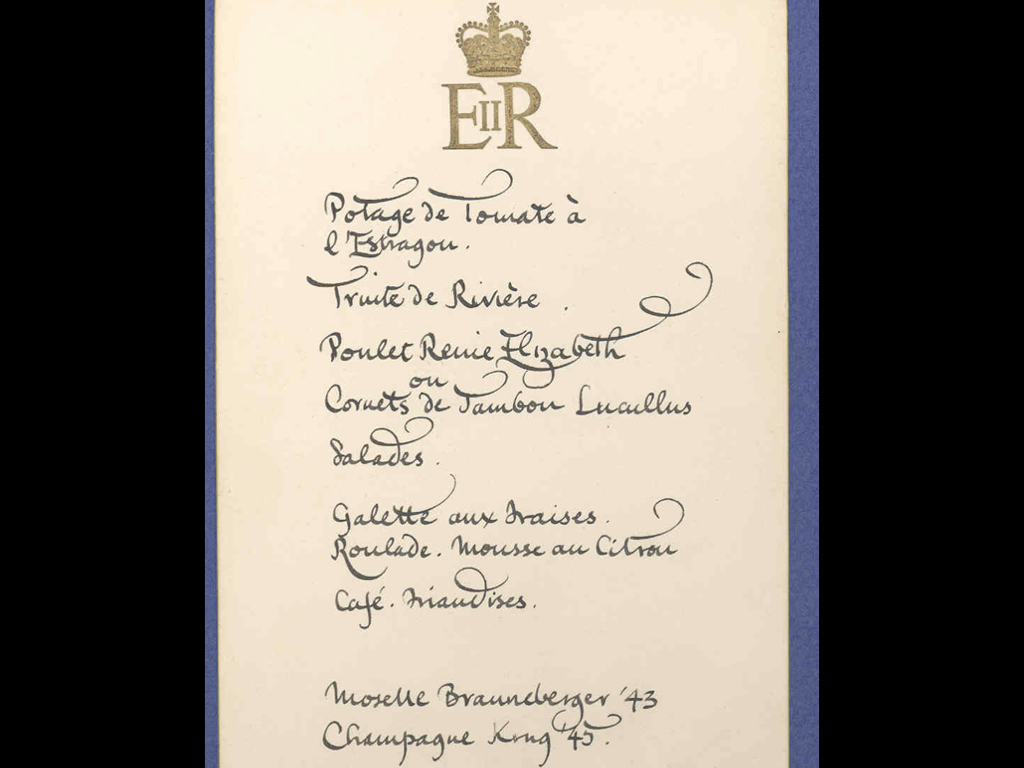
Devised by Rosemary Hume, Constance Spry and the Winkfield Place students.
She changed the name of her newly crafted Poulet Reine Elizabeth to a more appropriate Coronation Chicken, as it fitted the brief and the occasion, perfectly. And a very wide and difficult brief it was too, which was to create a dish to all tastes, that represent the colonial nature of the British Empire without upsetting or offending any of the commonwealth guests. But also, and more importantly, not upsetting or offending the austere postwar British housewives, who were pooling their ration books to cater for their children’s street party celebrations, as Britain was still rationing food to the country during the pomp and splendour of the Queen’s Coronation. Coronation Chicken was designed to be a diplomatic compromise, between the luxurious and the economical, because the end of food rationing was still more than a year away on 4th of July 1954. Given the circumstances, Rosemary Hume pulled it off rather well.

©Robert Ash 2022
My Coronation Chicken with wilted endive, smoked lardons and croutons
Coronation Chicken was devised and created by Rosemary Hume and the Winkfield Place students but the credit is often claimed by her better-known business partner and self publicist Constance Spry. Spry’s main part of commission was to arrange the flowers in Westminster Abbey and along the processional route from Buckingham Palace, but not the ‘dainty dish to set before the Queen’. It was Rosemary Hume who was the food authority, Spry described Hume in her biography as ‘The Bible, from whom she obtained all of her cooking knowledge’. Constance Spry was the ‘big name’ who had gained her fame through her flower arranging business and flower shops, notably in South Audley Street, Mayfair, and through her advice in newspapers and journals on making your home stylish and beautiful.
Constance Spry and Rosemary Hume were very big in the 1950s, but not quite as big as the book they published together, well I say published together, it was called The Constance Spry Cookery Book – see what she did there? No mention of Rosemary Hume at all. It became a best seller overnight, mostly because it contained Hume’s ‘Talk of the Town’ famous Coronation Chicken recipe, that the modern 1950s housewives had read so much about and were eager replicate.

Coronation Chicken is a dish of poached boneless chicken pieces, in a creamy Indian spiced dressing. The whole chicken is poached in wine, vegetables and bouquet garni, and allowed to cool in the liquid then de-boned. The original 1953 dressing was more complex than the modern mixture of just mayo and curry powder that you would get in a Marks sandwich. Cooked onion, tomato puree, curry powder, and half a glass each of red wine and water are brought to the boil, seasoned with salt, sugar, pepper and lemon juice and simmered. Once cooled, two tablespoon of Mayonnaise and one tablespoon of apricot puree is folded though and finished with two tablespoons of whipped cream, just enough to ‘coat the chicken lightly’. I’m not sure that many people would have known what mayonnaise was in the 1950’s, I know my Mum wouldn’t have, and suspect along with everyone else, she would have made it with salad cream. The irony of this most regal dish having its world premier in a damp, bombed-out school hall, is not lost on me.

©Robert Ash 2022
Another version of the classic Coronation Chicken, served with a red pepper, cardamon, couscous and mango puree.
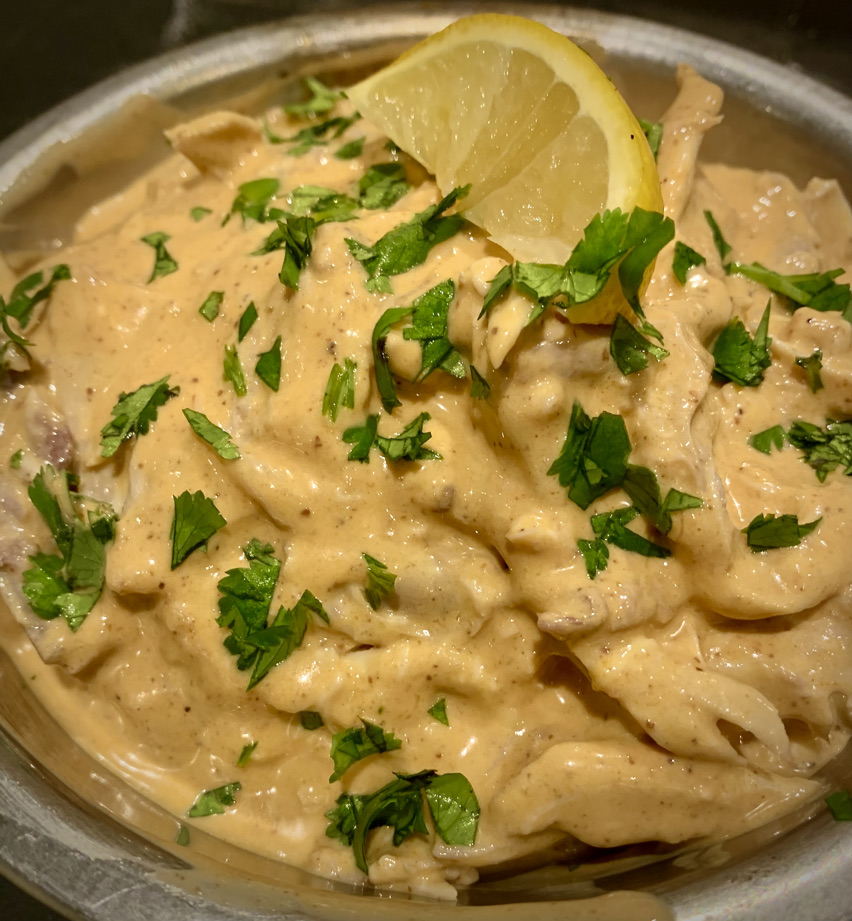
©Robert Ash 2022
Comments are closed.