
Unreliable Stories of Famous Dishes No 4
Carpaccio of Beef and The Bellini
Both of these were created for the famous Harry’s Bar in Venice by its owner Giuseppe Cipriani – pronounced Chipriani. Carpaccio, is a whole plate of lean, raw sirloin steak, sliced wafer thin, a pouring sauce is made from mayonnaise, parmesan cheese, Worcestershire sauce and lemon, and artistically drizzled over the beef Jackson Pollock style. It was named after the Italian painter, Vittore Carpaccio, who was famous for his love of deep red colours.
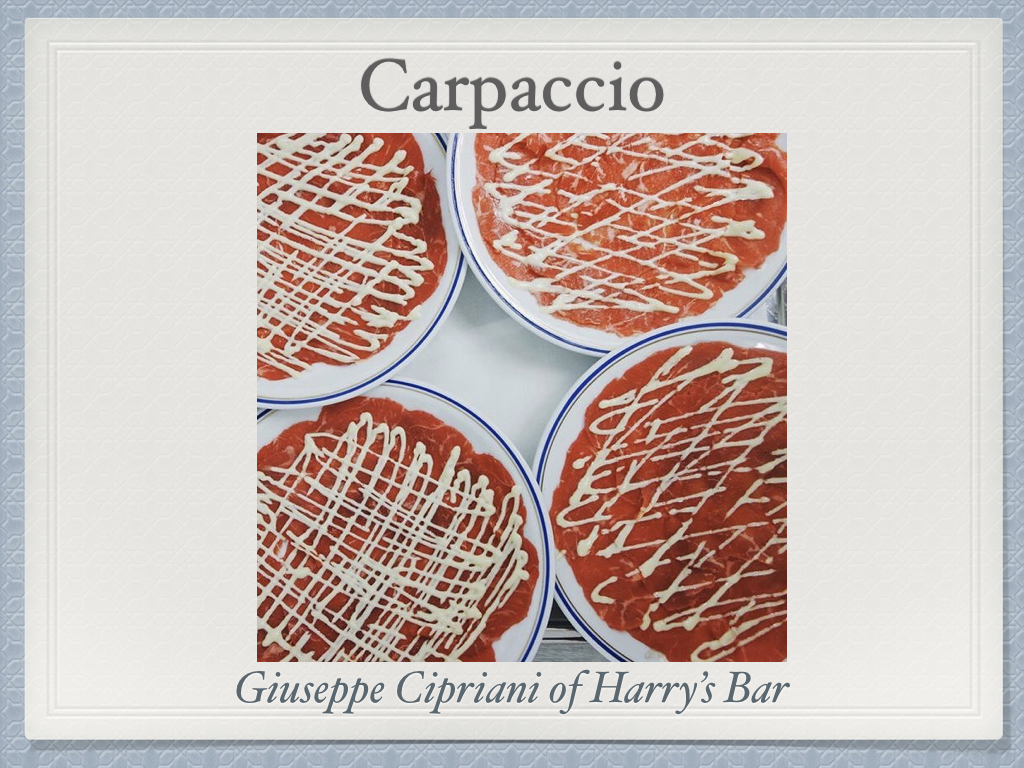
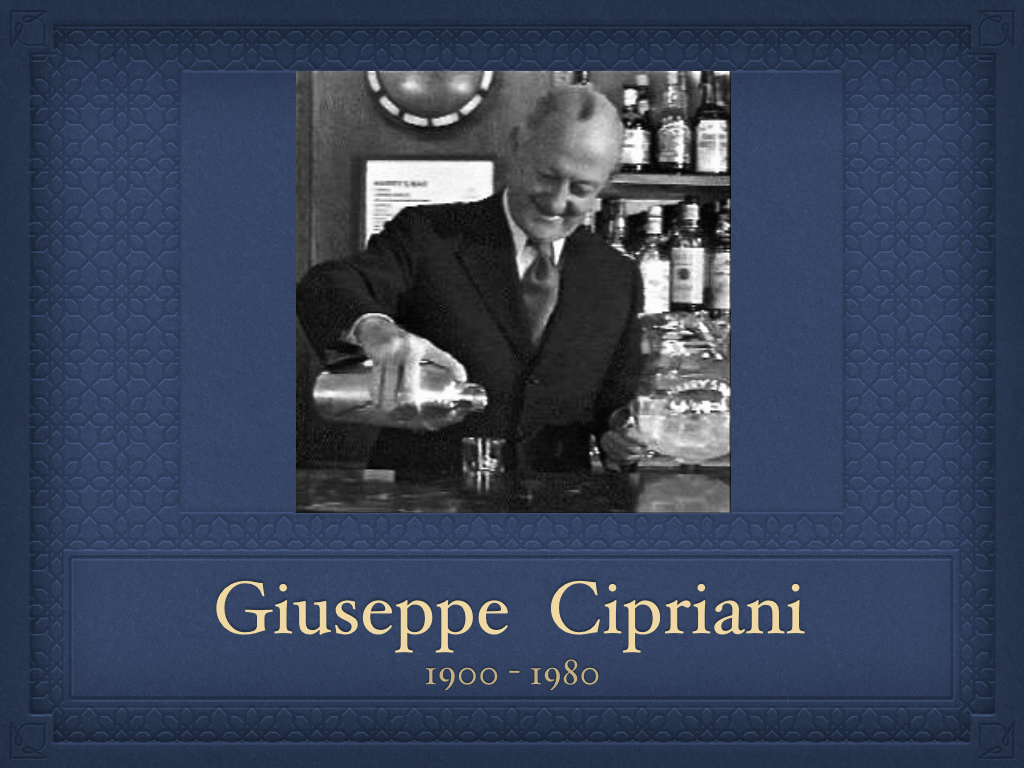
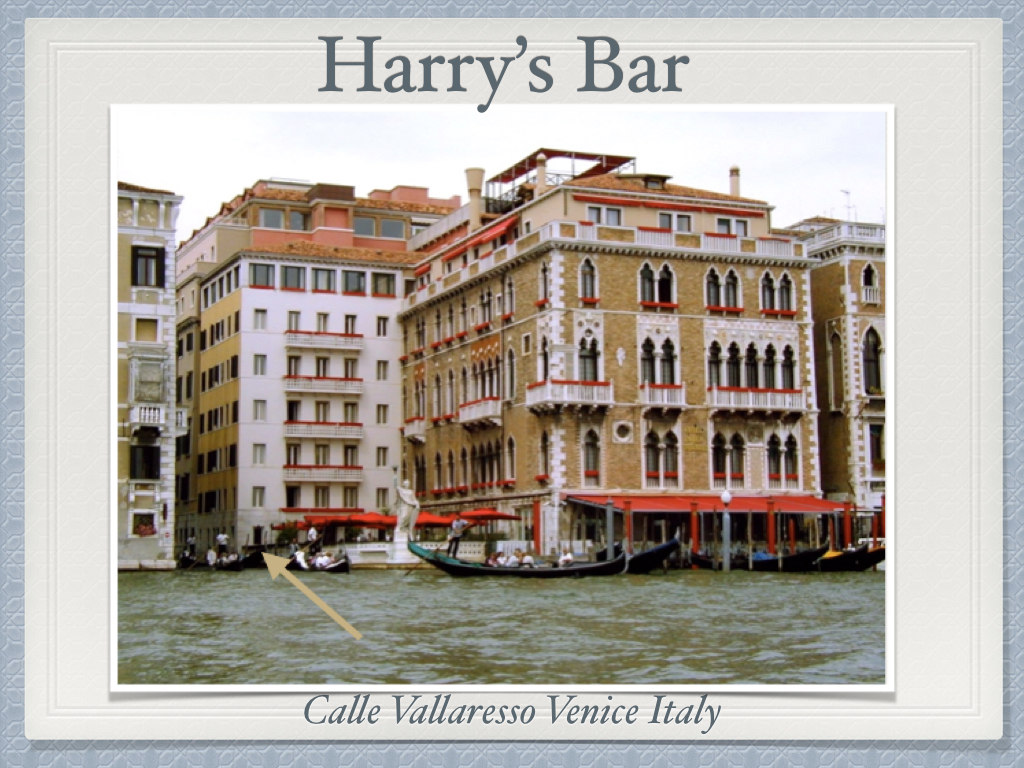
The story of Harry’s bar is a marvellous one. Giuseppe Cipriani met an affable drunk by the name of Harry Pickering, while he was head barman at the Hotel Europa bar in 1930. Pickering was a young wealthy Bostonian, American student who had come to Venice with his aunt to dry out, of all things. Harry, his aunt, and his aunt’s gigolo escort, spent entire days, just drinking at the bar. The Hotel Europa Bar, made a fortune serving just these three people, and so did Cipriani in tips. After a few months, Harry Pickering fell out with his aunt, who decided to head back to the United States with her escort, leaving him alone and penniless. Harry asked Giuseppe for a loan of 10,000 Lira to pay his bills and passage and vowed to send him the money when he got back home. Cipriani gave him the money and thought he would never see him again. However, a year later in February 1931, Harry Pickering showed up at the Europa Bar and gave him the money back with interest, another thirty-thousand Lira to open his own bar, and in 1931 Cipriani bought a small bar in Calle Vallaresso right on the front of the Grand Canal in Venice. He decided to call it Harry’s Bar, simply because Harry paid for it.
Harry’s Bar was too small to serve cooked food, but he needed small uncomplicated savoury dishes for customers to order and enjoy with their drinks, so Carpaccio of Beef was developed by Cipriani as easy to serve bar food. Plates could be made up in advance, stacked in a fridge, and when ordered, simply unwrapped and artistically jazzed up with the sauce. First served at Harry’s Bar in 1950 Carpaccio is famous now throughout the world, Its simplicity still has a very fresh, contemporary look about it but more importantly, it also signalled the start of a more modern Italian cuisine, much lighter food was in vogue, this was a tapas really, because Harry’s is a bar.
The Bellini Cocktail
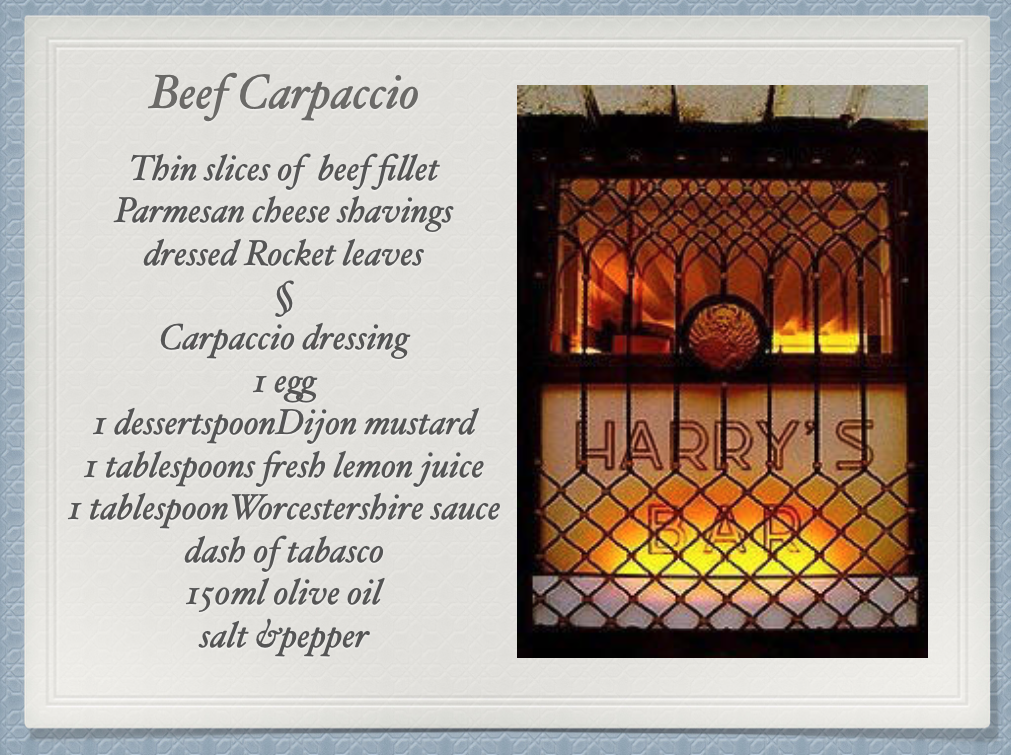
Harry’s Bar is also famous for the classic Bellini cocktail, created in the thirties by Chipriani, consists of Prosecco and white peach puree. When he first made the cocktail, the sun was setting and the colours of the drink matched the view. He christened it The Bellini, in 1948, after the rich colours used by the painter Giovanni Bellini. When making a Bellini, the glasses, Prosecco and white peach puree, should be as cold as possible. The general rule is to use one part white peach puree to three parts Sparkling Prosecco. When we were there, the barman used a cheese grater on the peaches and a strainer to collect the juice.
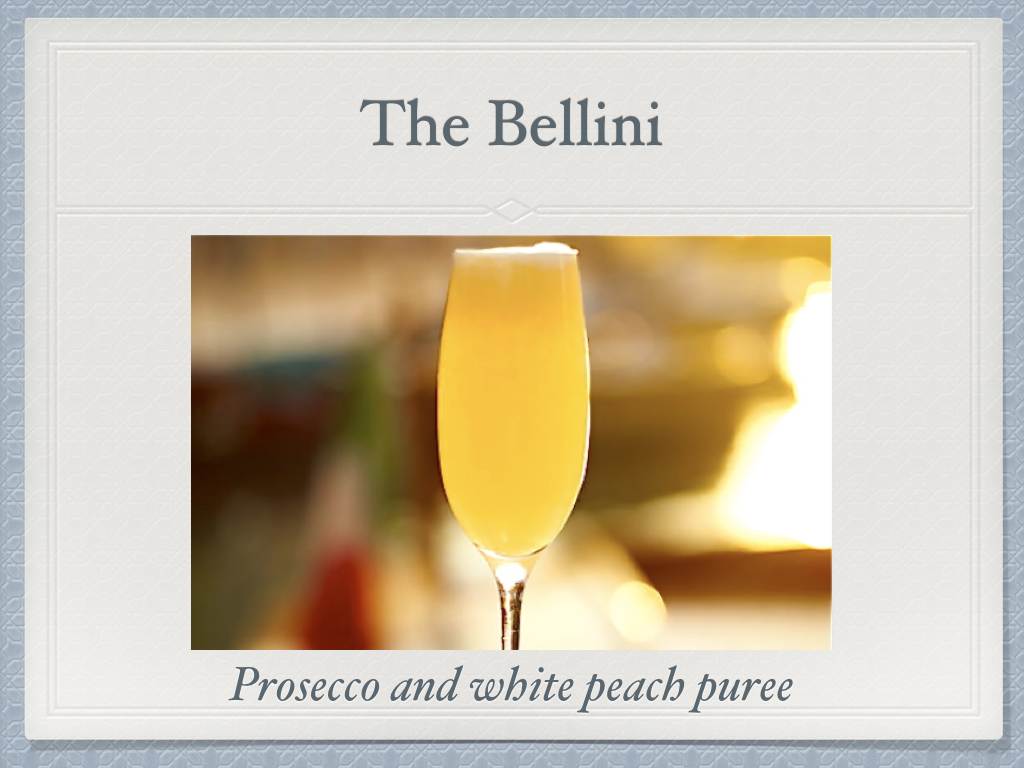
Harry’s is surprisingly small for its fame, no bigger that 21 feet square it can only sit 8 people at the bar with one more row standing behind them, there are also 10 tiny tables if you can get one. Very little has changed from the 1930’s except the clientele, it used to be a journalists haunt. Humorist Robert Benchley, famously sent this telegram to Harold Ross, his editor at The New Yorker. ‘Streets Full of Water. Please Advise’. One of the tiny tables was often occupied by Ernest Hemingway who was working as a journalist in those days. He used to complain to Chipriani that his stories were constantly being cut down by his newspaper for lack of space, 1000 words down to 500 then to 250, and he said in later years that kept him in good stead for writing novels as he could edit a story down to the bone and still keep the essence of the piece. Chipriani asked him what the least amount of words you would need to tell a story, Hemingway said six. Chipriani bet him he couldn’t, Hemingway wrote these 6 words on a napkin and handed it to him. ‘For Sale, Babies Shoes, Never Worn’. Wonderful.
Comments are closed.